
Fall at Work Lawyer in San Diego
Fall at work lawyer help for San Diego workers hurt slipping on a wet floor, tripping over a cord, or falling from a ladder, dock or roof. Workers’ comp generally covers a fall on the job no matter whose fault it was, and we step in when the insurer disputes it.
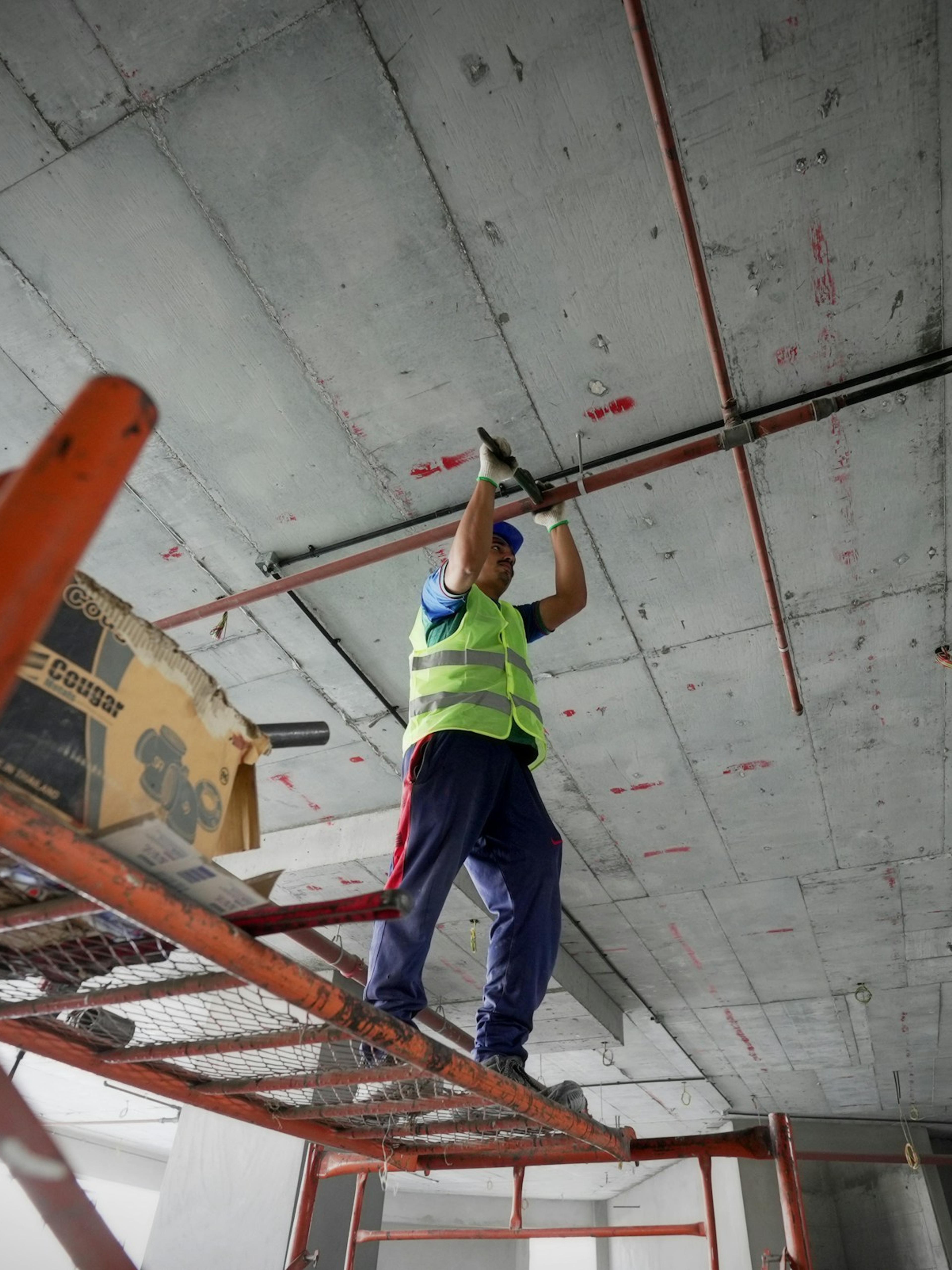
How falls at work happen
Falls are among the most common ways people get hurt on the job, and they happen in every kind of workplace, not just at heights. Most fall into two groups.
Slips and trips on the same level
- Wet, greasy or freshly mopped floors in kitchens, stores, hospitals and hotels
- Cords, hoses, pallets and boxes left in walkways and aisles
- Uneven pavement, broken tiles, loose mats and poor lighting
- Rain-slick entrances, ramps and parking lots
Falls from a height
- Ladders and step stools that slip, tip or break
- Stairs, loading docks and the backs of trucks
- Roofs, raised platforms and mezzanines without guardrails
If you work on a job site, our page on construction accident claims covers fall hazards specific to construction work.
A fall can hurt almost any part of the body, and many people have more than one injury. The ones we see most are a head injury at work such as a concussion, a back injury at work, a meniscus tear or other knee injury, and a rotator cuff tear from catching yourself. Broken wrists, hips and ankles are common too. Each of those pages explains the treatment and claim issues for that injury in more depth.

What workers’ comp covers after a fall at work
Workers’ comp generally covers a fall on the job no matter whose fault it was, yours, a coworker’s or no one’s. After a fall, benefits usually include:
- Medical treatment: emergency care, X-rays, CT scans and MRIs, setting broken bones, medication, physical therapy and surgery when it’s needed. You shouldn’t pay out of pocket for approved care.
- Temporary disability (TD): checks while your doctor says you can’t work, usually two-thirds of your average weekly pay, up to a state maximum.
- Modified duty: restrictions like no ladders, no climbing or seated work only. If your employer can’t offer work within them, TD should continue.
- Permanent disability (PD): if you don’t fully recover, each injured body part is rated and the ratings are combined to set more payments.
- A job displacement voucher for retraining if you can’t go back to your old job and your employer has no other work for you.
Get every injury on the claim
After a fall, the injury that hurts most gets all the attention. A broken wrist gets treated while a sore neck or a headache goes unmentioned, and weeks later the insurer says those problems aren’t part of the claim. Tell your employer and every doctor about each part of your body that hurts, even if it seems minor, and ask that each one be listed.
Common problems with fall at work claims
A fall usually leaves no doubt that something happened. The disputes are about where, why and how badly you were hurt:
- “No one saw it.” Many falls happen alone, in a stockroom or at the end of a shift. Without a witness, a late report can turn the claim into your word against the insurer’s.
- “It was a personal medical problem.” If you fainted or got dizzy before you fell, the insurer may argue your job had nothing to do with it. These cases turn on the facts, such as whether you fell from a height or struck equipment on the way down.
- “It didn’t happen at work.” Falls in parking lots, on breaks, or while running an errand raise questions about whether you were on the job. Many are covered.
- “You broke a safety rule.” Not wearing a harness or using the wrong ladder usually doesn’t take away workers’ comp, though the insurer may still raise it.
- Injuries left off the claim. The insurer accepts the fracture but denies the back, neck or head symptoms that showed up later.
- Pre-existing conditions. An old knee or back problem becomes the insurer’s explanation for your pain, even when the fall made it worse.
When to call a lawyer after a fall at work
Report the fall to your supervisor right away, in writing if you can, and ask for a claim form. Call a lawyer if any of these happen:
- Your workers’ comp claim was denied, or the insurer is still “investigating” weeks later
- The insurer says the fall was caused by a health problem, not your job
- Only some of your injuries were accepted
- You hit your head and still have headaches, dizziness or memory trouble
- Surgery, an MRI or therapy your doctor asked for was denied
- You can’t go back to work at heights or on your feet, or you were offered a settlement
A workers’ comp lawyer’s fee is approved by a judge and paid out of your award, so there is nothing to pay up front.
When someone other than your employer caused the fall
If the fall happened because of someone other than your employer, such as the owner of a property where you were sent to work, a contractor who left a hazard behind, or the maker of a defective ladder, you may have a separate injury claim against them in addition to workers’ comp. That claim has its own rules and deadlines, so ask about it early.
How we handle your fall at work claim
Step 1
Free case evaluation
Tell us what happened. We review your claim and explain your options in plain language, at no cost.
Step 2
We take over the claim
We file the paperwork, track every deadline and handle all communication with the insurance company.
Step 3
Treatment and benefits
We push for the medical care and temporary disability payments the law provides while you recover.
Step 4
Settlement or award
Once your condition is stable, we fight for a fair disability rating and settlement, or present your case to a judge.
Meet the lawyer who will handle your claim

Fall at work questions
I slipped because I was rushing. Can I still get workers’ comp?
Generally, yes. Workers’ comp is a no-fault system, so being careless, hurrying or not watching your step usually doesn’t take your benefits away. The exceptions are narrow, such as an injury caused by intoxication.
Is a fall in the parking lot or on my break covered?
Often, yes. A fall in your employer’s parking lot, or on a break you take at work, is usually treated as part of the job. A fall during your regular commute usually isn’t, though there are exceptions, for example when you were running an errand for your employer.
My back started hurting days after I fell. Can I add it to my claim?
Yes. Tell your employer and your doctor as soon as you notice it, and ask that it be added to your claim. Pain from a fall often spreads or shows up later. The longer you wait, the easier it is for the insurer to argue the new problem came from something else.
No one saw me fall. Do I still have a claim?
You can. Report the fall right away, write down where and how it happened, and take photos of the spill, cord, broken step or missing rail if you can. Coworkers who saw the hazard, or saw you right after, can help. So can telling every doctor the same account of what happened.
My employer ignored the hazard that made me fall. Does that change anything?
In most cases you can’t sue your employer, because workers’ comp is the remedy against the employer. But if the employer knowingly left a serious hazard in place, California law may allow a claim for serious and willful misconduct that increases your benefits. These claims are hard to prove and have their own deadline, so ask about one early.
More help with your claim
- Construction AccidentsConstruction accident workers’ comp lawyer in San Diego for falls, crane and equipment injuries, and uninsured subcontractors. Free case review.
- Head InjuriesHead injury at work lawyer in San Diego for concussions, TBI and lasting post-concussion symptoms. We push for testing and benefits. Free case review.
- Denied ClaimsDenied workers’ comp claim in San Diego? Our lawyers challenge denials, meet appeal deadlines and fight for the benefits you were refused.
- View all
Hurt in a fall at work?
Get a free case evaluation about your fall at work claim. You pay nothing up front.